About Manifold Heater
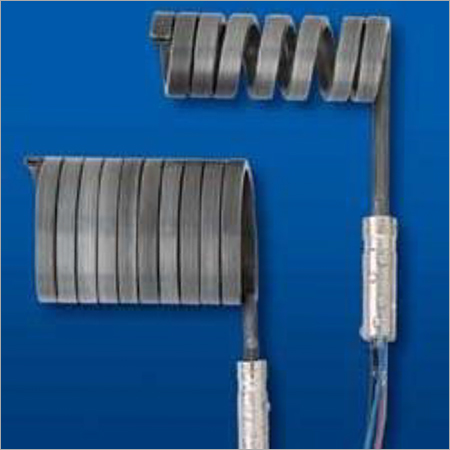
It is used to fit into milled grooves for hot runner molding systems. Since 2000, we have successfully been engaged in manufacturing and supplying an excellent quality array of Manifold Heater. This heater is demanded in construction, packaging, chemical and other industries for sealing of various materials. For manufacturing this heater, our deft professionals use quality tested components with the aid of progressive techniques. Available in different specifications, the offered Manifold Heater can be easily purchased from us at highly competitive prices. This heater is easy to install and requires less maintenance. We offer this heater at pocket friendly prices to clients.
Customizable for Your ApplicationFrom Y-type 3-arm manifolds to unique shapes, this manifold heater can be tailored in diameter, sheath material, and power rating. With options including stainless steel, Incoloy, or brass, and mounting styles like flange, clamp, or threaded, it seamlessly fits into your existing systems. This flexibility ensures maximum compatibility and operational efficiency for various industrial processes.
Advanced Features for Performance and SafetyEnjoy energy-efficient heating with uniform temperature distribution, thanks to high-grade magnesium oxide insulation and nickel chromium resistance wire. The carefully engineered cold zones at the heater's ends prevent terminal overheating. An ingress protection rating up to IP65 ensures safe operation in demanding environments, while the polished or shot-blasted surface finish meets industry standards.
Versatile Power and Connectivity OptionsSelect from a broad range of power outputs (500W-4000W), voltage options (110V, 230V, or 415V AC), and terminal types, including screw, lead wire, or pin terminal. Both single-phase and three-phase models are available to suit industrial applications. Standard lead lengths of 250mm can also be customized, offering convenience during installation and maintenance.
FAQ's of Manifold Heater:
Q: How are manifold heaters typically installed in industrial applications?
A: Manifold heaters are commonly installed using flange, clamp, or threaded mounting types, selected based on assembly requirements. Custom shapes and terminal types further simplify integration into hot runner systems, molds, and manifolds for efficient heating.
Q: What sheath materials are available, and how do I choose the right one?
A: Sheath materials include AISI 304, 316, and Incoloy 800. The selection depends on your process environment: AISI 304/316 provide corrosion resistance in most scenarios, while Incoloy 800 is ideal for higher temperatures or chemically challenging conditions.
Q: Where are manifold heaters most frequently used?
A: These heaters are widely employed in industrial settings such as injection molding manifolds, hot runner systems, die casting, and packaging machinery-anywhere precise, reliable thermal control is required for production efficiency.
Q: What is the benefit of the cold zone at the ends of the heater?
A: The cold zone, typically 30mm to 100mm at each end, minimizes the risk of terminal overheating, protecting wiring and ensuring safer, longer-lasting operation, even under continuous industrial use.
Q: What are the available power and voltage ranges for manifold heaters?
A: Power ratings range from 500W to 4000W, and voltage options include 110V, 230V, and 415V AC, accommodating different industrial requirements and regional standards. Customizations are available to match the exact power and voltage needs of your application.
Q: How can I customize a manifold heater to suit my process?
A: You can specify diameter (6mm, 8mm, 10mm or custom), power, voltage, sheath material, lead length, terminal type, cold zone length, and mounting method. This ensures optimal integration and thermal performance in your unique industrial application.
Q: What advantages do these manifold heaters offer over conventional heating methods?
A: Compared to traditional heaters, manifold heaters provide uniform heating, high energy efficiency, robust corrosion resistance, durable construction, and safer operations, thanks to features like cold zones and ingress protection up to IP65.






 Send Inquiry

 Send Inquiry


